
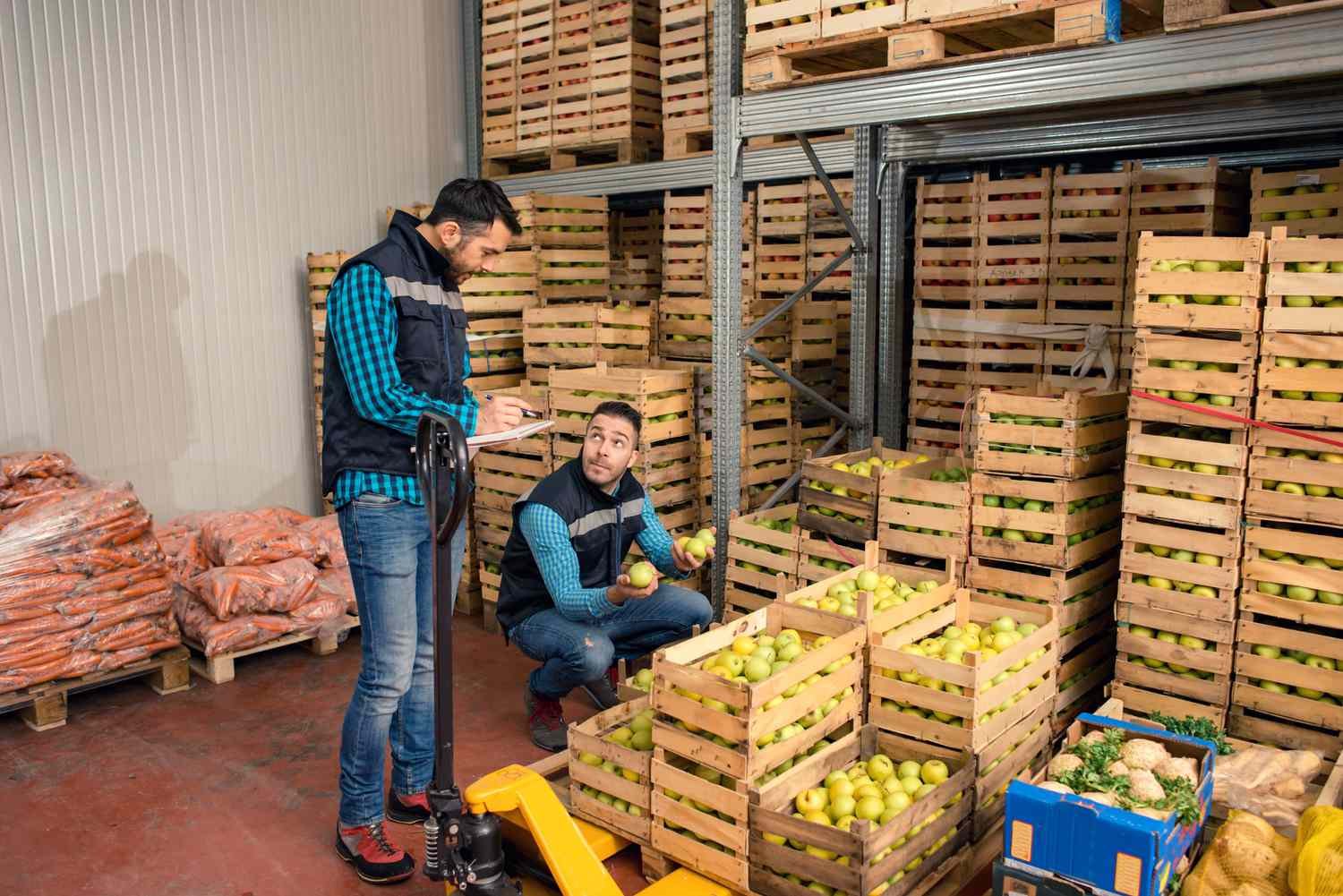
A soft commodity refers to futures contracts where the actuals are grown rather than extracted or mined. Soft commodities represent some of the oldest types of futures known to have been actively traded. This group of agricultural products may include products such as soybeans, cocoa, coffee, cotton, sugar, rice, and wheat, as well as all manner of livestock.
Soft commodities are sometimes referred to as tropical commodities or food and fiber commodities.
Key Takeaways
- Soft commodities are futures contracts on underlying agricultural products that are grown rather than extracted or mined.
- Soft commodities are among the oldest traded products in the world and continue to trade on listed exchanges.
- Some examples today include livestock, cotton, sugar, corn, and wheat; although various exchanges classify “soft” commodities in different ways.
Understanding Soft Commodities
Soft commodities play a major part in the futures market. They are used both by farmers wishing to lock-in the future prices of their crops and by speculative investors seeking a profit. Due to the uncertainties of weather, pathogens, and other risks that come with farming, soft commodity futures tend to be more volatile than other futures.
For example, weather and seeding/harvesting reports can cause the prices of grains and oilseeds to fluctuate significantly, impacting the values of contracts differently depending on the delivery dates.
Soft Commodities vs. Hard Commodities
Soft commodities are less well defined than hard commodities. Soft commodities are best understood as grown commodities. Coffee, cocoa, orange juice, sugar, canola, corn, lumber, wheat, lean hogs, feeder cattle, etc. all go through a growth cycle that ends in harvesting—usually for further processing.
This is in contrast to hard commodities such as mined metals (copper, gold, silver, etc.) and energy extraction (crude oil, natural gas, and products refined from them), which are waiting in the earth for extraction, as opposed to being planted and nurtured to maturity. Hard commodities can also be found in similar geological deposits around the world, whereas soft commodities depend on regional climate conditions to grow.
Alternative Classifications of Soft Commodities
As there is no definitive list of what is and is not a soft commodity, alternative classifications have cropped up. Agricultural commodities are sometimes used to refer to meat, livestock, cereals, grains, and oilseeds; leaving cocoa, orange juice, and so on in the category of soft commodity by themselves. This is not always a great solution as lumber is shoehorned into one or the other, creating an agriculture and forestry category or a softs, food, and fiber grouping.
CME Group, for example, only lists coffee, sugar, cocoa, and cotton futures as soft commodities within the broader category of agricultural futures. The Intercontinental Exchange (ICE), on the other hand, lists cocoa, coffee, sugar, cotton, and orange juice with additional grains and agricultural products underneath the soft commodity category.
Of course, whether a contract is classified as a soft commodity or not is less important to a futures trader than the understanding of the underlying commodity and its historical trends. Because of their volatile nature and differing supply and demand cycles, soft commodities can be more challenging to trade than hard commodities.
As with any derivatives trade, investors should understand the market they are entering as well as the implications of the contract they are using to enter well in advance of putting real money on the line.
Trading Soft Commodities
Cocoa
Cocoa is traded in dollars per metric ton and one contract is for 10 metric tons, so when cocoa is trading at $1,500/M ton, the contract has a total value of $15,000. If a trader is long at $15,000/M ton, and the markets move to $1,555/lb, that is a move of $550 ($1,555 – $1,500 = $55, and 55 x 10 M ton. = $550).
The minimum price movement, or tick size, is a dollar, or $10 per contract. Although the market frequently will trade in sizes greater than a dollar, one dollar is the smallest amount it can move.
Coffee
Coffee is traded in cents per pound. One contract of coffee controls 37,500 pounds of coffee. When the price of coffee is trading at $1/pound, the cash value of that contract will be $37,500 ($1.00 x 37,500 = $37,500).
The tick size is 5 cents per 100 pounds, which equates to $18.75 per tick. For example, if a trader were to go long at $1.1000 and the markets moved to $1.1550, the trader would have a profit of $2062.50 ($1.1550 – $1.1000 = $0.0550, and $0.0550 x 37,500 = $2,062.50).
Cotton
Cotton is traded in 50,000-pound contracts. It is also traded in cents per pound, so if the market is trading at 53 cents per pound, the contract will have a value of $26,500 ($0.53 x 50,000 pounds = $26,500).
The minimum tick size is $0.0001 or $5 per contract. Therefore, any 2 cent move in cotton will equate to either a gain or a loss of $1,000. When the price of cotton exceeds 95 cents per pound, the minimum tick movement will expand to $0.0005 to accommodate larger daily ranges.
Frozen Concentrated Orange Juice (FCOJ)
Orange juice is a relative newcomer to the commodity markets. One contract of FCOJ equals 15,000 pounds. If the current market price is 90 cents per pound, the contract has a value of $13,500 ($0.90 x 15,000 pounds = $13,500).
The minimum tick is $0.005, or $7.50 per tick per contract. For example, let’s say you buy a contract of FCOJ when the market is at 95 cents and then sell it for $1. In this transaction, you would make $750 on the 5 cent move in FCOJ.
Sugar
Sugar trades in contracts, sometimes known as “Sugar No. 11“, representing 112,000 pounds of sugar, and is expressed in terms of cents per pound. If the futures price is $0.1045, the contract has a value of $11,704 ($0.1045/lb x 112,000 pounds = $11,704). If the market moves from $0.1000 to $0.1240, that is equivalent to a dollar move of $2,688.
The minimum price movement for sugar is $0.0001 or $11.20 per contract.
Correction—Oct. 23, 2024: This article has been corrected to state that the tick size for coffee is 5 cents per 100 pounds,