
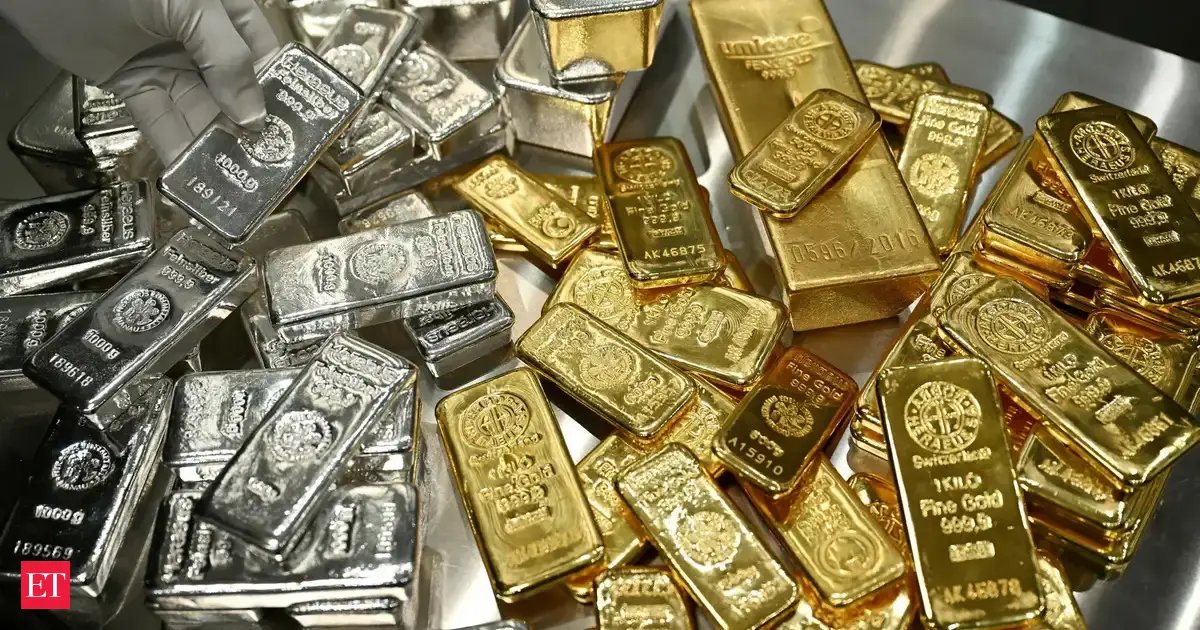
This rally is not driven by speculation alone. It reflects deep structural forces reshaping the global economy. Investors are rushing toward metals as inflation risks linger, interest rates trend lower, and geopolitical uncertainty remains high. At the same time, copper and silver are benefiting from a massive industrial demand wave tied to artificial intelligence, electric vehicles, renewable energy, and grid expansion.
The U.S. dollar is weakening at its fastest pace in years, boosting commodity prices worldwide. Central banks are aggressively accumulating gold to reduce reliance on dollar reserves. Supply disruptions, tariffs, and underinvestment in mining have tightened markets just as demand accelerates. Together, these forces explain why precious and industrial metals are rising in unison — and why the rally may not be over yet.
Why gold prices are hitting record highs in 2025
Gold’s rally is rooted in macroeconomic stress and policy shifts. The metal briefly touched $4,525 per ounce, a fresh all-time high, before consolidating near current levels. Monthly gains are nearing 9%, driven by expectations that the Federal Reserve will begin cutting interest rates in 2026.
Lower rates reduce the opportunity cost of holding gold, which pays no yield. At the same time, inflation concerns and rising government debt are fueling what traders call the “debasement trade.” A weaker U.S. Dollar has made gold cheaper for overseas buyers, amplifying global demand.

Central banks are another powerful force. Many have accelerated gold purchases to diversify reserves and hedge against financial instability. Analysts now project gold could dip modestly toward $4,350 near quarter-end before climbing toward $4,600 over the next 12 months, supported by sustained official-sector buying.
Why silver is outperforming gold this year
Silver’s surge is even more dramatic. Prices briefly topped $72.70 per ounce, and despite minor pullbacks, the metal remains up over 140% in 2025. Unlike gold, silver plays a dual role as both a safe-haven asset and a critical industrial material. Demand from solar panel manufacturing, electric vehicles, and data centers has exploded. Each new energy or AI project consumes silver permanently, tightening supply. Monthly gains near 40% reflect how quickly inventories are being absorbed. With silver now classified as a strategic and critical mineral in several countries, analysts see prices holding above $70 into 2026, with forecasts pushing toward the mid-$70s.
Why copper demand is exploding from EVs, AI, and infrastructure
Copper’s rally tells the story of the energy transition. Prices are approaching $12,000 per metric ton, driven by soaring demand from electric vehicles, artificial intelligence data centers, and power grid expansion. A single electric vehicle can use up to four times more copper than a traditional gasoline car.
According to Goldman Sachs, grid expansion and power infrastructure could account for more than 60% of copper demand growth by 2030. Supply, however, is struggling to keep pace. Mining disruptions in Chile and Peru have constrained output, while new projects face long approval timelines.
Adding to the pressure, U.S. trade policy has reshaped the market. A 50% tariff on imported copper products triggered stockpiling and hoarding. J.P. Morgan expects tight supply conditions to persist well into 2026.
What futures markets are signaling about metals prices next
Looking ahead to 2026, analysts broadly expect gold, silver, and copper prices to stay elevated, with volatility driven by interest rates, global growth, and supply constraints. Forecasts suggest the metals rally is shifting from a momentum-driven surge to a structurally supported cycle.
Gold price forecast for 2026
Gold is expected to remain well above historical averages. Most bank and commodities desk models see gold trading in a $4,300–$4,900 per ounce range through 2026. Central bank buying remains the anchor. If the Federal Reserve begins rate cuts, real yields could fall further, supporting upside risk toward the upper end of forecasts. Downside risk appears limited unless inflation cools sharply and the dollar strengthens materially.
Silver price forecast for 2026
Silver forecasts are more aggressive due to tight supply and industrial demand. Analysts project an average range of $68–$78 per ounce, with volatility likely. Solar installations, EV production, and data center expansion continue to absorb supply faster than mining output grows. Silver’s dual role as an investment metal and industrial input keeps it highly sensitive to both rate policy and global manufacturing trends.
Copper price forecast for 2026
Copper outlooks remain bullish but uneven. Consensus estimates place copper between $5.40 and $6.10 per pound, with some upside scenarios tied to grid expansion and AI infrastructure. Electric vehicles, renewable energy, and transmission upgrades drive demand, while mine supply growth remains constrained. Trade barriers and inventory rebuilding could keep prices near cycle highs.
Gold is expected to stabilize at historically high levels. Silver may remain the most volatile, with sharp rallies on demand shocks. Copper prices are likely to stay supported by long-term electrification trends. Together, forecasts suggest metals will remain a key inflation and growth hedge throughout 2026, rather than reverting to pre-2024 norms.