
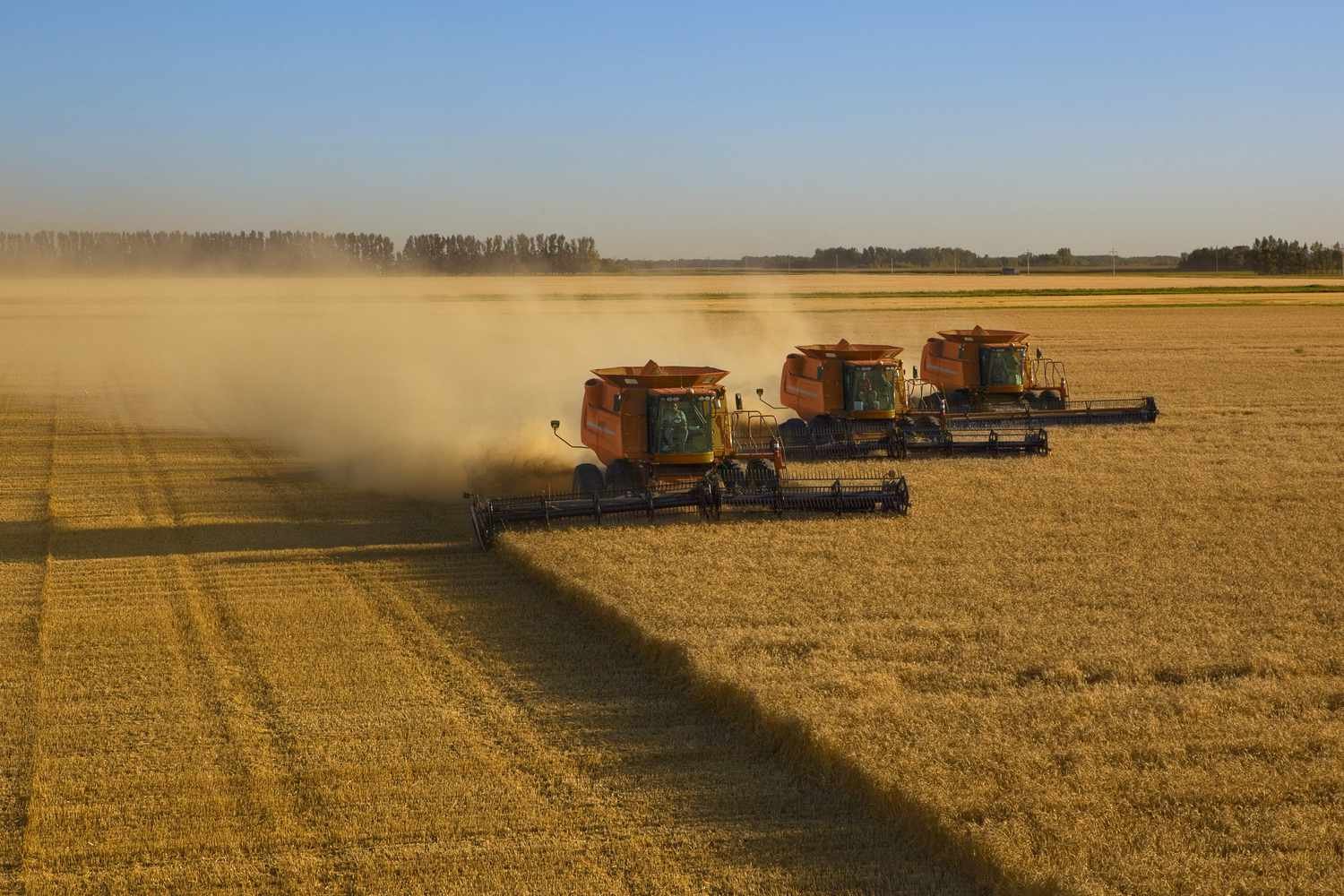
Food drives the world; apart from clean water, access to adequate food is the primary concern for most people on earth. This makes agriculture one of the largest and most significant industries in the world. Agricultural productivity is important not only for a country’s balance of trade but the security and health of its population as well.
While nearly all countries produce some agricultural products, some produce far more than others and even act as net food exporters. These agricultural giants expend vast resources to increase their production levels, allowing them to reach economies of scale that increase efficiency and cut down on the cost per agricultural unit produced.
Key Takeaways
- Agriculture is one of the largest and most significant industries in the world, so taking measures to increase production levels is key for the security and health of a country’s population.
- Of the major cereal and vegetable crops, the United States, China, India, and Russia are the top producers.
- The United States is the top exporter of agricultural products with $178.7 billion in exports as of 2023.
- To increase agricultural productivity, developed countries are turning to genetically modified seeds to increase yields.
- On the other hand, in countries where infrastructure is extremely under-developed, the focus of the government is to develop the infrastructure and encourage the use of fertilizers.
Top Producers
There are numerous ways of assessing agricultural output, including sheer tonnage and the dollar volume of the commodities produced. It’s important to look at both, as it is often the case that commodities critical to the food supply of less-developed countries don’t show up as high dollar-value crops.
Of the major cereal and vegetable crops, the United States, China, India, and Russia frequently appear as top producers. In addition to being the leading producer of rice worldwide, China is also the leading producer of wheat and the number two producer of corn, as well as the largest producer of many vegetables including onions and cabbage. In terms of total production, the United States is fourth in wheat, first in corn, and second in soybeans.
There are other important crops, however. Millet is a major crop in much of Africa and Asia, and India and Niger are the leading producers. Likewise, barley, rye, and beans/pulses are not that important within the United States but are crucial crops in countries like Russia, Germany, and India.
Top Exporters
It should not be too surprising that countries like China and India feature prominently on the lists of top agricultural producers; these countries have large populations and internal food security (that is, producing enough to feed a nation’s population from internal resources) is a major priority. A great deal of this production is used internally, though, and the list of the top exporting countries looks much different.
| Top Exporters by Export Value (USD) in 2023 | |
|---|---|
| Country | Exports (in billions) |
| United States | $178.7 |
| Brazil | $166.5 |
| Netherlands | $134.1 |
| China | $98.9 |
| Germany | $81.1 |
Here, again, it is important to note the difference between volume production and high-value production. The Netherlands is a tiny country; its presence on the list is due to the high value of flowers and live plants (the Netherlands supplies nearly half of the global total) and meat and dairy production.
When it comes to the staples that feed the world (rice, corn, wheat, beans, lentils, and animal proteins), countries like the United States, Germany, Brazil, and China feature more prominently.
How Will the World Make More?
Almost every country wants to increase its agricultural productivity, but how they intend to go about that varies greatly with the country or region in question.
In countries like the U.S., Canada, and Western Europe, there is very little land allowed to go to waste, and infrastructure like roads are well-developed. Likewise, irrigation is widespread, and farmers use fertilizer extensively. This has led many countries and farmers to turn to genetically modified seeds to increase yields and reduce the need for costly (and potentially polluting) fertilizer and herbicides.
The picture is much different in Africa and much of South Asia. In these areas, infrastructure is extremely under-developed and simply getting crops to market (or inputs like fertilizer to the farms) can be a struggle. Likewise, irrigation infrastructure is lacking, leaving farmers much more exposed to the variability of weather. Not surprisingly, then, a large focus of governments in these countries is to try to build roads, improve access to water and encourage the use of inputs, like fertilizer.
Is the United States a Net Food Importer or Exporter?
The United States is both a major exporter and importer of food. Despite its large exports, the U.S. remains a net importer of food, having imported nearly $190 billion in food products in 2023 compared to $178.7 billion in exports.
Which Countries Import the Most Agricultural Products From the United States?
China has long been the top destination for U.S. agricultural products, although the future of U.S./China agricultural trade has varied over the years due to tariffs and trade disputes. In 2023, exports to China were valued at $33.7 billion. After China, the next largest markets include Mexico ($28.2 billion), Canada ($27.9 billion), the EU ($12.3 billion), and Japan ($12.2 billion).
Is Food Production Increasing in the United States?
Yes; U.S. agricultural production increased approximately 1.49% annually between 1948 and 2021. Over the same time period, the amount of land and labor devoted to agricultural production declined annually by 0.45% and 1.93%, respectively.
The Bottom Line
Although agriculture is no longer a major employer in North America or Europe, and food security is not a preeminent problem for most citizens, it is still a globally vital industry. As investors saw a few years ago, bad weather and low inventories quickly led the prices of many food commodities to soar and led to riots and political disturbances in many countries. On a more positive note, it’s a major source of export earnings for countries across the development spectrum.
Given the importance of agriculture and the importance of increasing yields, companies that facilitate higher production should find their products in increasing demand. Whether it’s agricultural equipment like tractors, inputs like fertilizer and herbicide, or higher-yielding modified seeds, companies serving the global agriculture market have a large and still under-served market to address.