
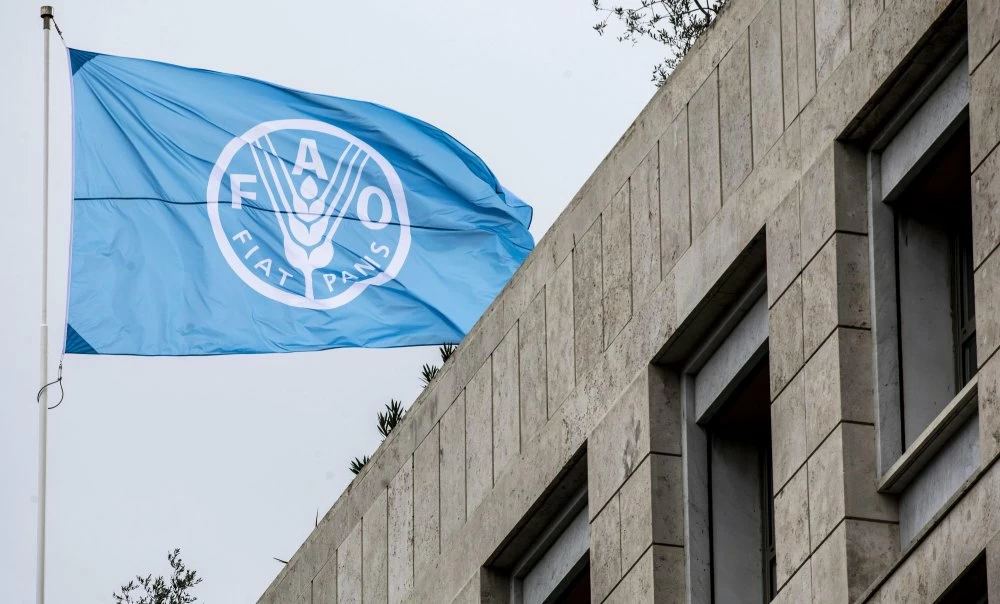
Marrakech – Morocco has been elected to the vice-presidency of the UN Food and Agriculture Organization Council during the 179th FAO conference in Rome, securing a position until 2029 within the organization’s 49-member executive body.
The election reflects member states’ confidence in Morocco’s commitment to FAO governance structures, according to Ambassador Youssef Balla, Morocco’s permanent representative to UN agencies in Rome. Balla leads the Moroccan delegation participating in the December 1-5 conference proceedings.
During his intervention, Balla outlined Morocco’s support for the 2026-2027 work program and budget adjustments.
He welcomed the reallocation of $5 million to priority areas, including the Technical Cooperation Program, Codex Alimentarius, and other domains essential to FAO’s normative and operational mandate. The funding aims to strengthen support for developing countries and improve the organization’s overall performance.
The ambassador also acknowledged efforts to accelerate digital transformation, enhance environmental sustainability, and improve results-based management. He stressed the importance of maintaining a modern, efficient FAO focused on impact delivery.
The conference will examine organizational reforms and governance improvements to enhance FAO’s effectiveness in addressing global food security challenges.
Discussions occur amid pressure on food markets and intensified climate change effects, aligning with the UN80 initiative to modernize the United Nations system.
Morocco faces multidimensional resource pressures
Recent FAO documentation reveals Morocco’s complex agricultural position. The organization’s 2025 Mediterranean and Black Sea fisheries report indicates Morocco dominates capture fishing, particularly small pelagics, while remaining one of the region’s few net exporters, though the report notes a decline in the net export ratio compared to previous editions.
However, Morocco displays the lowest aquaculture consumption among covered countries at 0.1 kg per person annually, representing just 0.6% of total aquatic product consumption.
The Moroccan market relies almost entirely on capture fisheries, creating structural dependence on marine products through a stable but traditional model.
Despite having formalized aquaculture strategy, dedicated legislation, and two maritime coastlines with favorable natural conditions, Morocco’s aquaculture production remains underdeveloped compared to Mediterranean neighbors.
The kingdom has established aquaculture allocation zones (AZA), but production stays embryonic relative to regional standards.
Sustainability concerns emerge from fishing practices. Research cited by FAO indicates Moroccan Mediterranean trawling operations reject between 1.06% and 43.7% of catches, with significant seasonal and geographic variations.
Published in the Egyptian Journal of Aquatic Biology and Fisheries, the study represents the first comprehensive analysis of Moroccan trawling fleet discard composition using 2019-2022 onboard sampling data.
It analyzed 103 species from 59 families discarded by trawling fleets, including 16 elasmobranchs and 88 bony fish, with teleosts representing the predominant rejected biomass fraction followed by elasmobranchs, thaliaceans, and holocephalans.
Bottom trawling operations drag nets along seabeds, capturing diverse marine species with substantial portions subsequently discarded.
In water and land resource management, Morocco has extended subsidies for solar pumps and drip irrigation across 51,000 hectares while increasing desalination capacity through solar energy integration.
These technical measures help farmers structure practices around rigorous water economy in regions facing prolonged droughts.
The FAO’s 2025 land and water resources report documents Morocco’s adaptation measures for water scarcity and soil degradation.
Solar-powered desalination units provide valuable complementary resources for coastal irrigated perimeters where conventional water availability regularly decreases.
The Souss-Massa region implements a “territorial development pact” linking public authorities, professional organizations, and local actors around sustainable soil management.
This territorial approach represents collective organization designed to disseminate agricultural practices better adapted to environmental constraints.
This framework includes a three-year action plan coordinating soil, vegetation, and water management to prevent land degradation.
The FAO observes these territorial approaches provide overall coherence to land management by integrating planning, local consultation, and coordinated usage, creating common frameworks between public services, farmers, and communities for sustainable agricultural action structuring.
Additional international appointments
Morocco’s international agricultural engagement extends beyond FAO leadership. The kingdom was re-elected to the International Maritime Organization Council for 2025-2026, securing its 17th mandate among Category C’s 20 seats during the 34th IMO Assembly in London.
Transport and Logistics Minister Abdessamad Kayouh led Morocco’s delegation, with support from diplomatic coordination. The newly elected Council will convene on December 4 to select leadership for the next biennial term.
Morocco also secured re-election as vice-president of UNESCO’s Intergovernmental Hydrological Program for the Arab region during the 2025-2027 mandate.
Ambassador Samir Addahre noted this reflects continued confidence in Morocco’s commitment to sustainable water resource management and scientific cooperation.
The UNESCO position aligns with Morocco hosting the 19th World Water Congress in Marrakech from December 1-5, organized by the Equipment and Water Ministry with the International Water Resources Association (IWRA). The appointment reinforces Morocco’s engagement in water security and innovative management approaches.