

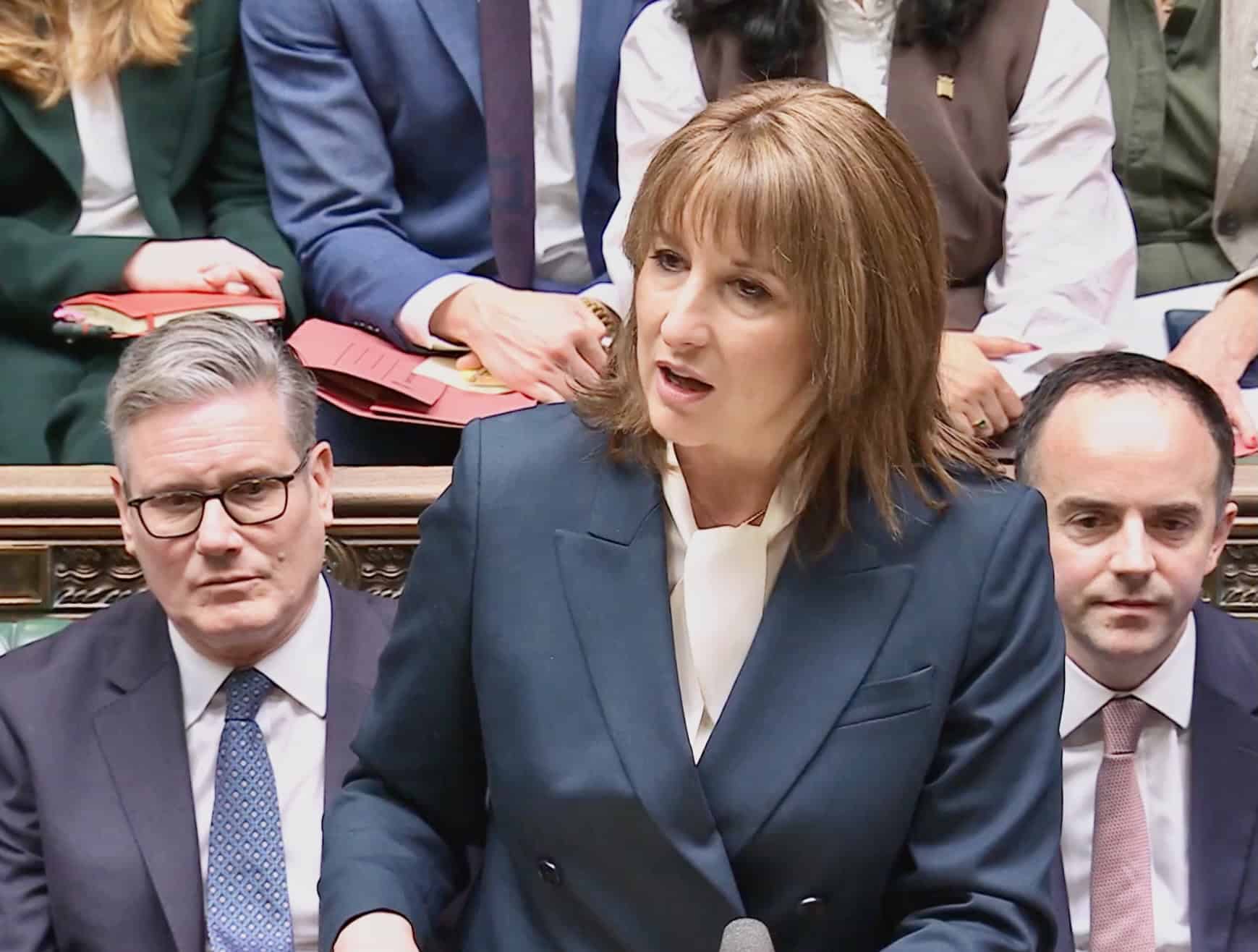
The Chancellor of the Exchequer, Rachel Reeves, revealed the Autumn Budget today, and for those anticipating multiple tax increases, the statement did not disappoint. Reeves said the government is “doubling down on its plans and the economic and fiscal strategy it set last autumn.”
While predicting the budget would pursue growth, get borrowing down, while fixing the NHS and the welfare system, the government would also “make the tax system fairer and fit for 21st century Britain.” The budget aims to raise £40 billion in taxes, similar to 2024, to fund £29.7 billion in additional public spending.
Tax increases include a higher capital gains tax (CGT) and dividend tax, which will affect entrepreneurs. Other tax changes include an increase in national insurance contributions (NICs), which will hit around 1.2 million firms, an energy profits levy (EPL) targeting net-zero, and a “Mansion Tax” starting with homes valued at £2 million.
On the other side, SEIS/EIS programs will include full expensing made permanent for R&D/tech/green projects. Additionally, new UK listings will be exempt from stamp duty on stock market listings for 3 years.
CI received multiple comments from Fintech Insiders sharing their opinion on the Chancellor’s budget plans.
Stuart Law, CEO of Assetz Capital, said the Budget reveals a “striking imbalance.” While offering “warm words” on growth, the details indicate a focus on large sites and large developers despite the slow build rates.
“Major developments are delivering roughly 0.4 homes per week per site, yet the government has doubled down on a strategy dominated by big, complex schemes with long lead‑times and huge infrastructure requirements.The MOD land release programme (which was not mentioned in the Chancellor’s speech and appeared only in the supporting documents released afterwards), targeting up to 100,000 homes, will inevitably be delivered through master‑developers, large consortia or development corporations. Likewise, the £1.3 billion devolved National Housing Delivery Fund (also absent from the speech and revealed only in the written Budget papers) is designed for large urban regeneration projects and strategic infrastructure‑heavy sites. None of this creates land access for SME builders, none of it requires plot subdivision, and none of it enables the smaller sites that SMEs specialise in bringing forward,” said Law.
the Chancellor missed a profound opportunity as SME house builders could deliver far more homes nationwide than a handful of giant developers ever could
He said the Chancellor missed a profound opportunity as SME house builders could deliver far more homes nationwide than a handful of giant developers ever could.
“Instead, the Budget offers nothing targeted at SMEs – no small‑site pipeline, no serviced plot requirements, no fast‑track planning routes for <30‑unit schemes, and no mechanisms to level the playing field. At a time when the country needs rapid, distributed housing delivery, it is deeply disappointing that the government has centred its entire strategy on big schemes with slow outputs and long gestation periods. The absence of meaningful SME support undermines the goal of accelerating housing supply. It ignores the proven ability of smaller builders to deliver quickly, flexibly and at scale across the nation.”
Azimkhon Askarov, co-CEO & Partner of Payments Company CONCRYT, said the Budget marks a turning point by increasing taxes on wealth and assets, signaling the UK’s growth model is changing, moving away from domestic consumption, inward investment, and London’s role as a magnet for global wealth.
“As higher earners and investors look abroad for more favourable tax environments, the ripple effect will reach far beyond London’s elite. Local businesses that once thrived on domestic spending are already feeling the chill, from luxury retailers to service providers. For many, looking overseas is no longer just an opportunity, it’s a survival strategy,” said Askarov. “This exodus of wealth and spending power will reshape how British merchants think about growth. Expanding into international markets will become essential, not optional. That means getting serious about cross-border payments, ensuring they can move money efficiently, manage currency risk, and offer customers seamless payment experiences wherever they are in the world.”
Askarov said the ability to trade and get paid globally will define the next generation of successful UK firms.
As higher earners and investors look abroad for more favourable tax environments, the ripple effect will reach far beyond London’s elite
Edvards Margevics, also co-CEO & Partner of Payments Company CONCRYT, shared his opinion that the Reeves Budget may have been packaged as an effort to restore fiscal stability fub the tax hikes risk alienating investment in one of the most dynamic sectors: technology.
“Raising taxes on capital, wealth, and assets sends a difficult signal to venture investors and founders alike, particularly those who have the option to relocate their capital, teams, or headquarters abroad. At a time when countries across Europe are actively competing to attract high-growth technology businesses, the UK cannot afford to make itself less appealing to the innovators driving economic productivity.”
Raising taxes on capital, wealth, and assets sends a difficult signal to venture investors and founders alike, particularly those who have the option to relocate their capital, teams, or headquarters abroad
Margevics worried that a two-speed economy may be in the making as good ideas are born in Britain but then leave to scale elsewhere. For Fintechs, he said this is particularly concerning as innovation thrives on cross border projects.
“If investment begins to flow out of the UK, the long-term cost won’t just be lost tax revenue, but diminished global influence in emerging fields such as AI, digital infrastructure, and financial technology. In an era defined by digital trade, Britain’s growth story depends not on taxing innovation, but on enabling it to move and scale globally.”
Greg Cox, co-founder and CEO of Quint Group, said the Chancellor says she is championing innovation while backing working people. Yet today’s Budget tells a different story. While acknowledging the Chancellor has a challenging balancing act, the UK government is choosing policies that will “weigh heavily on British businesses, especially those trying to grow, hire, and innovate.”
the Chancellor says she is championing innovation while backing working people. Yet today’s Budget tells a different story
“For a government that says, ‘private investment is the lifeblood of economic growth’, taxing that investment more heavily is a contradictory signal,” stated Cox. “Hiking dividend tax, freezing income tax thresholds, and tightening rules on salary sacrifice add up to a stealth tax on growth, squeezing cash flow and increasing the cost of doing business. These policies penalise millions of ordinary savers and early-stage investors, and disincentivise the very risk-takers we need to create jobs and attract investment.”
The Chancellor’s Budget is undermining the entrepreneurial energy that has made the UK a hub for innovation, especially for Fintechs. Discouraging long-term savings and shrinking the upside for investors will make it far harder to attract risk capital, scale operations, and plan with confidence, said Cox.
“That said, challenging times have a way of sharpening resolve. For firms with vision and discipline, this could still be a moment to double down on lean, high-impact strategies. We welcome the expansion of the Enterprise Management Incentive scheme and the UK listing relief. Those incentives matter, and the recognition that scale-ups need long-term support is the right message. To truly compete on a global stage, UK fintech and innovation need a world-beating, simple, and ambitious incentive regime. We hope today is the first step in that conversation, not the end of it.”
Co-Founder at Icon Solutions, Tom Kelleher, noted the omission of Fintech from the Autumn budget.
Kelleher said that one of the UK’s largest economic sectors, Fintech and financial services, was not a central focus in the Budget. Last March, the government acknowledged that financial services are key to growth.
“While the UK Fintech sector has faced challenges such as decreased investment and a slowdown in IPOs, and has recently dropped from second, behind the US, to third place globally, these developments highlight the importance of continued support and innovation,” said Kelleher. “As the sector navigates rising taxes and a complex global environment, there is a valuable opportunity for policymakers to foster a stable, growth-oriented policy framework. Such an environment would help ensure that UK Fintech remains globally competitive and continues to drive economic growth. With the right consistency and confidence from government, Britain’s Fintech sector can build on its strengths and seize future opportunities.”
one of the UK’s largest economic sectors, Fintech and financial services, was not a central focus in the Budget
Todd Clyde, CEO at Token.io, warned that the Budget puts even more pressure on UK businesses already struggling with rising prices. Retail sales dropped 1.1% in October, a reversal of the 0.7% rise in September. At the same time, consumer confidence has plunged to historic lows. Clyde explained that every additional tax burden pushes retailers to review costs more aggressively.
Adflex CEO Pat Bermingham said that firms will continue to question the outlook for growth as the Budget did not reveal a clear plan to accelerate the country’s digital transformation.
“The Chancellor also failed to take the opportunity to make the Fair Payment Code mandatory, which would have helped consign late payments to history, prevent more businesses closing, and promote healthier cashflow across the British economy.”
Jamie Roberts, Managing Partner, YFM Equity Partners, said the Budget reflects the economic pressure the UK is facing, but the long-term growth ultimately depends on entrepreneurs. Lower productivity and higher costs are already undermining founders, and sustained investment to support innovation is essential.
“The UK remains one of the strongest environments in the world to start and grow a business. We benefit from deep pools of talent, established legal frameworks, and proven incentives for investment, but that competitive edge cannot be taken for granted. What matters now is a policy environment that gives growing companies the confidence to invest, hire, and innovate. A consistent long-term approach will be key to ensuring UK businesses continue to thrive.”
The UK remains one of the strongest environments in the world to start and grow a business. We benefit from deep pools of talent, established legal frameworks, and proven incentives for investment, but that competitive edge cannot be taken for granted
Roberts added that VCT rule reforms that expand qualifying criteria to include more established firms are a game-changer.
“Regional businesses often scale over a longer timeline and the previous requirement to secure a first VCT-qualifying investment within a fixed window meant too many strong companies missed out on essential early growth capital.This change means investors can support high-growth businesses for longer, helping ambitious management teams scale across the UK. It recognises that ambition exists everywhere, and now the investment can too. This kind of policy encourages sustained growth, creates jobs outside the major hubs, and strengthens the ecosystem for entrepreneurs and investors alike.”
Commenting on the tax reduction for UK listings, Vroon Modgill, CEO of Sokin, said this marks a starting point in an attempt to reinvigorate business and, of course, the Fintech ecosystem.
“The three-year stamp duty holiday for new share listings, for example, is a positive move, but it only helps IPO-ready businesses on the path to listing. To fuel the next generation of fast-growth Fintechs, more needs to be done to help earlier-stage businesses. We sincerely hope that the consultation to increase support for scale ups and attract more entrepreneurs happens swiftly so that the UK stands a chance at being a destination for innovation and growth.”
To fuel the next generation of fast-growth fintechs, more needs to be done to help earlier-stage businesses
SmartSearch CEO Phil Cotter slammed the Autumn Statement, calling it harmful to the affluent.
“This Budget is bad news for high-net-worth individuals,” said Cotter. “The policies announced will trigger a major wave of financial restructuring as people and businesses race to maximise tax efficiency. Financial criminals will exploit the moment, using the surge in asset transfers as cover to move, hide and clean illicit money.”
This Budget is bad news for high-net-worth individuals
He said the Budget will further amplify the ongoing turmoil regarding the AML supervision framework. Plans for the FCA to take over AML oversight of law and accountancy firms has created a backlash.
“In a period where vast volumes of wealth are set to shift hands, any instability in AML oversight creates the perfect storm for criminals to slip through the cracks. That’s why rigorous verification of where money is coming from, where it is going, and who it belongs to will be paramount. Without strong AML vigilance, the surge in asset transfers risks sweeping illicit funds through the system alongside legitimate ones. Transparency around beneficial ownership, source of funds and assets will be essential to ensure that even amid heightened financial activity, we can still identify and stop criminal behaviour.”
The CEO of payments firm Form3, Mike Walters, supported plans to expand the Enterprise Management Incentive (EMI) but questioned how the UK would maintain its position as a Fintech hub without greater resilience in banking and payments.
“The proposed support for expanding EMI and ensuring that the tax system champions the successes of UK business, founders, and employees is hugely promising. Preserving the UK’s status as a global hub for fintech will depend on the government protecting and retaining the deep pools of talent that this industry relies on. It’s disappointing that there was no mention of any plans to back the progress made by the National Payments Vision. The UK is currently a global payments leader, and building out resilience in banking and payments will set the stage for the next decade of growth. The government needs to build on its Mansion House pledges and ensure a steady stream of capital continues to flow into high-potential companies where it can directly translate into jobs and economic growth.”
Brendan Callan, CEO of Jefferies-owned Tradu, said stamp duty changes are a sign of progress but still fall short of a true retail investment reset. He believes an abolition of the full stamp duty is what is necessary to help rebuild the equity culture.
“The Chancellor’s measures to make up the shortfall in public funds have neglected the urgent need to revitalise domestic investment,” said Callan. “Increasing the dividend tax at a time when retail ownership is historically low will only push households even further out of the market. Why would retail investors choose our market when US equities already enjoy stronger corporate earnings growth? More than half of retail investors believe US stocks are more attractive than UK stocks due to lower tax obligations. This move only serves to widen that gap.”
Increasing the dividend tax at a time when retail ownership is historically low will only push households even further out of the market
Callan said freezing the income tax allowance risks harming the UK further, as without any incentives to help drive savings into domestic equities, the UK will struggle to unlock dormant capital.
“The reduction of the cash ISA allowance to £12,000 is a further half measure that won’t succeed in reigniting interest in domestic equities by itself. Penalising savers won’t turn them into investors. If the government genuinely wants to channel more capital into UK equities, then the priority must be to remove cultural and structural barriers, and not simply restrict savers’ options. Though the move to offer stamp duty holidays for new listings is a step in the right direction, the failure to abolish the share tax altogether and enhance financial literacy means we’re leaving up to £740bn on the table. Tinkering around the edges isn’t working, and it will not be surprising if the government remains in the same place come the next Budget.”
de Vere CEO Nigel Green did not mince his words declaring the “shambolic budget” will drive a wealth exodus in the UK. Green said the OBR’s mistakenly published documents show an extraordinary tax squeeze heading for high earners, homeowners, and professionals across the UK. The £26 billion tax rise will launch the overall tax burden to its highest share of GDP in modern records.
“People who generate significant economic activity can relocate easily. They analyse long-term patterns, not political slogans. A new levy on higher-value homes signals a government willing to target assets whenever revenue is needed. That is enough to shift investment strategies away from the UK.”
He added that people with worldwide opportunities compare the UK’s choices with alternatives elsewhere. He labeled the Autumn Budget a “masterclass in disincentivising saving and investing.”
“That is how a wealth exodus from Britain begins. It will not be loud at first. It will be systematic, rational, and global.”
That is how a wealth exodus from Britain begins. It will not be loud at first. It will be systematic, rational, and global