
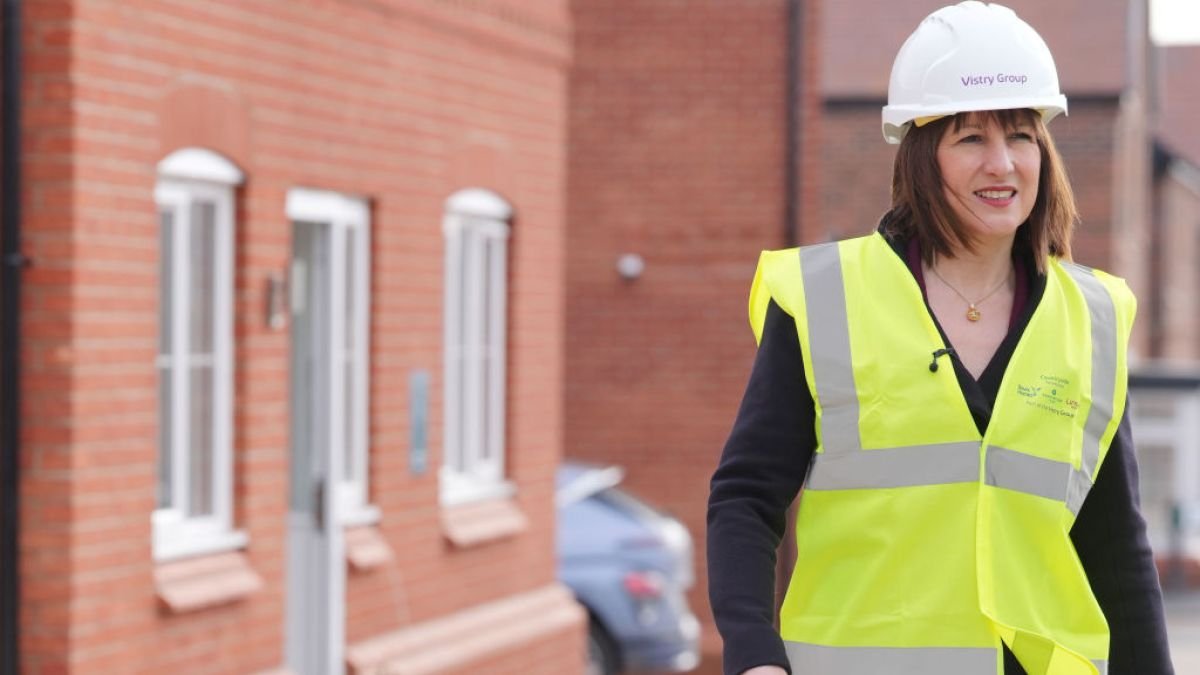
The Chancellor is weighing up the idea of putting heftier taxes on property to make the Budget add up
Rachel Reeves is keeping the option of higher property taxes on the table as she draws up plans for a Budget that will need to fill a black hole in the public finances estimated at more than £20bn.
The Chancellor’s allies have refused to rule out ideas such as a “mansion tax”, while emphasising that no final decisions have been made ahead of the Budget on 26 November.
But with Labour’s manifesto promising to avoid increases in income tax, national insurance and VAT – though that pledge is now in question – and businesses struggling with an increased tax burden, major changes to the taxation of people’s homes may be needed to make the sums add up.
Mansion tax on house sales
Reeves has promised to target those with the “broadest shoulders” – even while she rules out a direct tax on stocks of wealth, or raising income tax on the biggest earners.
One mooted way to extract more from richer households would be to start imposing capital gains tax on the sale of expensive homes.
Currently, if you sell your main residence for a profit you do not have to pay any tax on that profit. However, the Chancellor is reported to be considering removing that exemption for higher-value properties, perhaps with a starting threshold of £1.5m, in what has been dubbed a “mansion tax”.
This could raise something in the low billions of pounds, but would spark controversy because it would disproportionately affect certain parts of the country, particularly in London and the South East, where house prices are so high that many of the houses caught in the new tax would be normal family homes rather than extravagant mansions.
Likelihood: 3/5
More council tax for the wealthy
Another way to get more revenue out of those living in pricey properties would be to add extra council tax bands on top of the existing system.
At the moment a large but not luxurious new-build home and a sprawling country estate could both be put in the highest band, H, and therefore face identical council tax bills.
Having one or two additional bands for the most valuable homes, and allowing councils to charge properties in those new bands more, would bring in revenue for cash-strapped local authorities.
The exact amount would depend on the level at which the additional tax is set, and it would only make money for the Chancellor if she cut back the Treasury grant to councils on the grounds that they are bringing in more from their residents.
Likelihood: 3/5
Council tax shake-up
Council tax was introduced in 1991, and the property valuations used to determine how much each household in England pays have not been updated since then.
That means that when new homes are built, the local council must decide how much it would have been worth 34 years ago and tax it accordingly. It also allows those whose homes have grown in value faster than average to enjoy relatively lower bills.
A full revaluation of council tax would not only update this anachronistic system, but also provide a handy way for the state to rake in some extra revenue with sneaky rises in how much tax is charged on each of the new bands.
But Housing Secretary Steve Reed has said a revaluation is “not on our agenda”, which may be politically wise given that any shake-up would create as many losers as winners.
Likelihood: 2/5
Annual property tax
Former Treasury economist Tim Leunig has proposed a radical new solution to taxing property: replace council tax with an annual levy based on a proportion of the value of each home.
This would be paid by the owner of the property, not necessarily the person who lives there, and would go to fund both local and national public services.
In his paper for think tank Onward, Leunig suggested a tax of about 0.5 per cent a year on most homes, with a higher rate of 0.8 per cent on the value of any property above £1m.
This could cover the entire £50bn council tax take – but there is little sign that the Government is currently looking for such a revolutionary overhaul of the way property is taxed.
An even more extreme proposal – a land value tax applied equally to all land whether or not a house has been built on it – is loved by many economists but would open a political can of worms.
Likelihood: 1/5
Higher charges on landlords
Those who rent property out are a tempting target for the Government, given that they tend to be better off than the average taxpayer.
Rental profits are subject to income tax but not to national insurance contributions, meaning that they are taxed more lightly than income from work.
Applying national insurance to landlords would fix this discrepancy and raise around £2bn for the Exchequer – as well as being the sort of tax-tinkering that Reeves has previously been attracted to.
However, this could result in landlords passing on the costs to their tenants in higher rents.
Likelihood: 4/5
Scrap stamp duty
The idea of doing away with stamp duty, a tax hated by most economists, has entered the political conversation after Kemi Badenoch unveiled it as a flagship Conservative policy at her party’s annual conference earlier this month.
Stealing the Tories’ thunder would be a nice tactic for Reeves and go some way to combat claims from its opponents that Labour is the enemy of aspiration.
But it would cost as much as £11bn, meaning that this dramatic move would have to be offset by significant tax increases elsewhere in order to make sense.
Likelihood: 3/5