
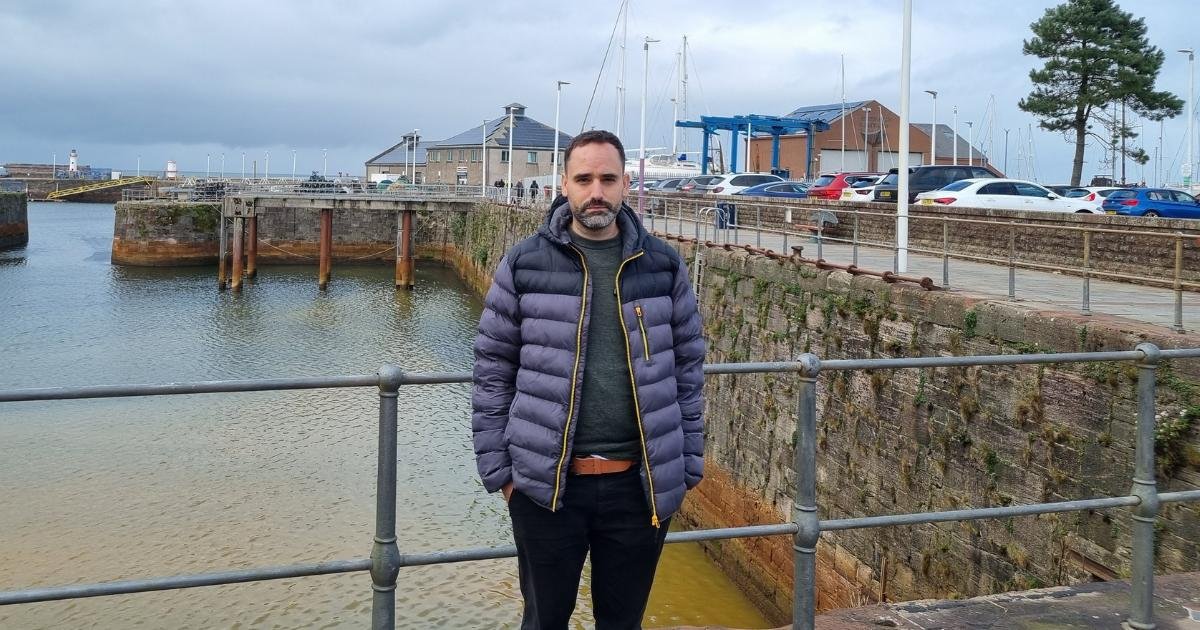
In response to a Freedom of Information Request, United Utilities confirmed that in the last two years, 3,168 megalitres of water went unaccounted for in the Whitehaven, Workington and St Bees area.

Cumberland Council’s member for Bransty, Joseph Ghayouba, submitted the FOI and believes that the lost water shows a need to bring water companies under Government control.
In its response, United Utilities confirmed that the volumes had been lost, explaining that unaccounted for water can be caused by industrial sites that are not on a meter; households that use more than estimated, “misuse” of the network and leaks.
He said: “In the last two years, they have lost 3,100 megalitres of water that goes unaccounted for.”
Coun Ghayouba said that volume of water is equal to 3.1 billion litres.
“It’s clear, that the privatised model isn’t working,” said Coun Ghayouba “and I think the figures that I’ve got there on this email from United Utilities, it’s clear that it’s never going to work, it hasn’t worked and we need to nationalise them.”
The Government announced in July that water regulator Ofwat would be scrapped and all responsibilities for water regulation would be brought under a new watchdog with extensive powers.

Nationalisation means bringing a service previously delivered by private companies under the control of the Government.
READ MORE: United Utilities set to make significant investments across Cumbria
In response, a spokesperson for United Utilities said: “Reducing the number of leaks is incredibly important to us, and to our customers. We are finding and fixing more leaks than ever before, repairing up to 1,000 leaks a week across the region.”
Workington, Whitehaven and St Bees is served by Water Supply Zone 031, United Utilities estimates that the lost water equates to a leakage level of 25 per cent, which is higher than the regional average of 22.
The spokesperson said: “In Cumbria, we will upgrade over 200km of water mains and have installed more than 72,000 sensors across our network to identify and fix leaks before they impact supplies to customers.
“Since May, we have installed thousands of smart meters in Carlisle to help drive down leakage both on our network and at customers’ properties. Reducing leakage is a priority, and we recognise that there is still more to be done. That’s why we plan to invest over £50 million in the next five years to continue reducing leakage levels.”