
Chemical analyses of an ancient river channel’s sediment at a Roman site in northern England have challenged a long-held view that Britain experienced economic collapse when Roman rule ended around AD410. Instead, the findings suggest metal production continued and only declined much later.
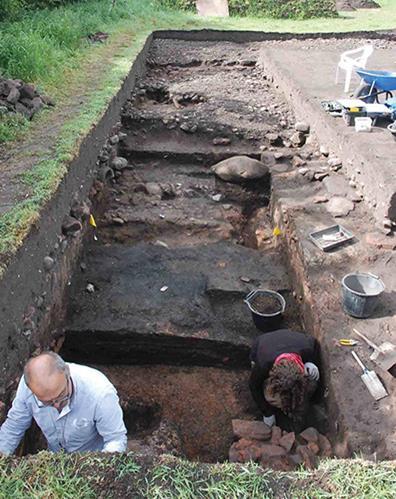
The village of Aldborough in North Yorkshire was once the prosperous Roman town of Isurium Brigantum in a region known for large-scale metal working, including iron and lead. While conducting an archaeological survey of the site over the past decade, researchers spotted a sediment sequence in a bore hole core from an ancient channel, which last flowed around 2000 years ago into the River Ure.
‘We identified the possibility of the sediment sequence containing a geochemical proxy record to reconstruct a history of metals production in this key region from the Roman period to the present,’ says Christopher Loveluck at the University of Nottingham. Airborne pollutants from metal processing over the years could have been deposited and trapped in the sediment layers, which would reveal how much lead and iron working was taking place at a given time.
Analyses using multi-element inductively coupled plasma mass spectrometry showed that iron concentrations were accompanied by tell-tale chemical signatures of pollution, including arsenic and phosphorus, which are typically associated with smelting iron ore. Meanwhile, lead concentrations coincided with byproducts linked to smelting galena, or lead ore (lead sulfide), including silver, zinc and copper.
By dating the samples via pollen analysis and radiocarbon techniques, the researchers started to tally the chemical findings with written and archaeological evidence from the region. They found that fluctuations in pollution corresponded with documented trends in British metal production spanning AD1100 to 1700, as well as sociopolitical events, such as Henry VIII’s dissolution of the monasteries, wars and pandemics, which would have disrupted metal production.
Looking back in time
Since the core reflected these known historical events, it offered the researchers a unique way to look further back to when no written records exist. ‘This core has provided the first unbroken, continuous record and timeline of metal pollution and metal economic history in Britain, from the 5th century to the present day, at the heart of a major metal-producing region,’ says Loveluck.
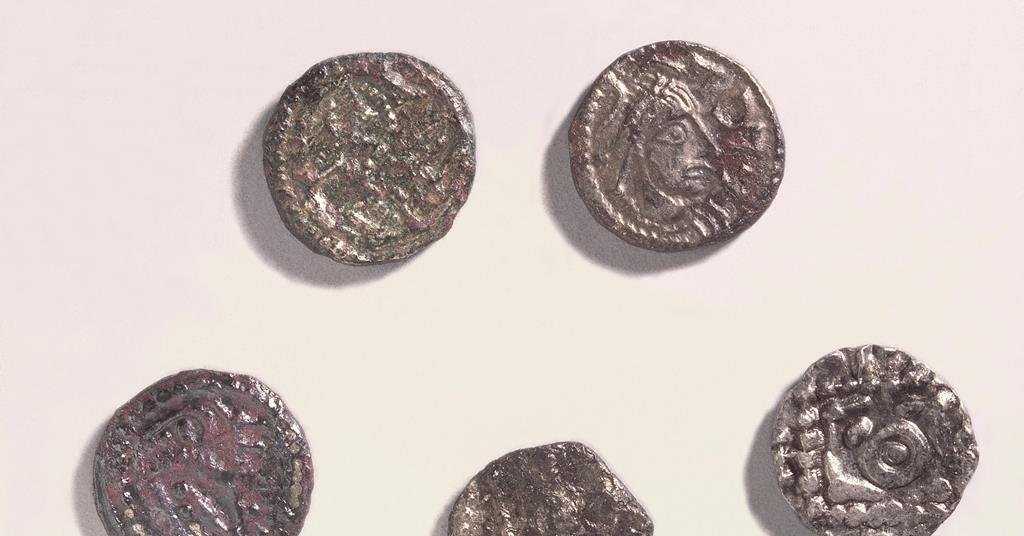
One of the key findings suggests that Roman practices of metal production, including the use of coal, continued long after their departure, indicating that the economy did not collapse as previously thought. Earlier evidence mainly comes from southeast Britain that points to an absence of new coinage after AD402, as well as a decline of Roman pottery industries and ostentatious buildings.
Conversely, according to the sediment record after AD410, metal production appeared to increase until around AD600, after which the ores and coal fuel of the Roman period were abandoned, explains Loveluck. ‘This sudden depression may be the first quantifiable record of the waves of plague between the 540s and 590s,’ he says. ‘It’s always amazing when you see primary evidence contradicting or giving much greater nuance to long-standing interpretations of our past.’
‘It’s fascinating. What stands out is the lack of “collapse” in metal mining in the post-Roman period,’ says Jane Kershaw, an archaeologist at the University of Oxford. ‘Indeed, iron working increases massively from the 6th century, which is important because iron working is a specialist skill.’
Kershaw explains that iron working is labour intensive as the ore first needs to be mined, then smelted, hammered and welded, before making the finished artefact. Meanwhile, woodlands would need to be exploited to obtain the charcoal for furnaces. ‘So, it suggests people are able to carry this work out even without a Roman infrastructure,’ Kershaw says.
‘This exciting paper showcases the value of taking an interdisciplinary approach to unpicking the complex evidence for long-term shifts in economic production in Britain,’ says David Petts, an archaeologist at Durham University, UK. ‘This work provides a surprising result by offering an alternative perspective to traditional narratives which frame the end of Roman Britain as a period of profound economic rupture.’