
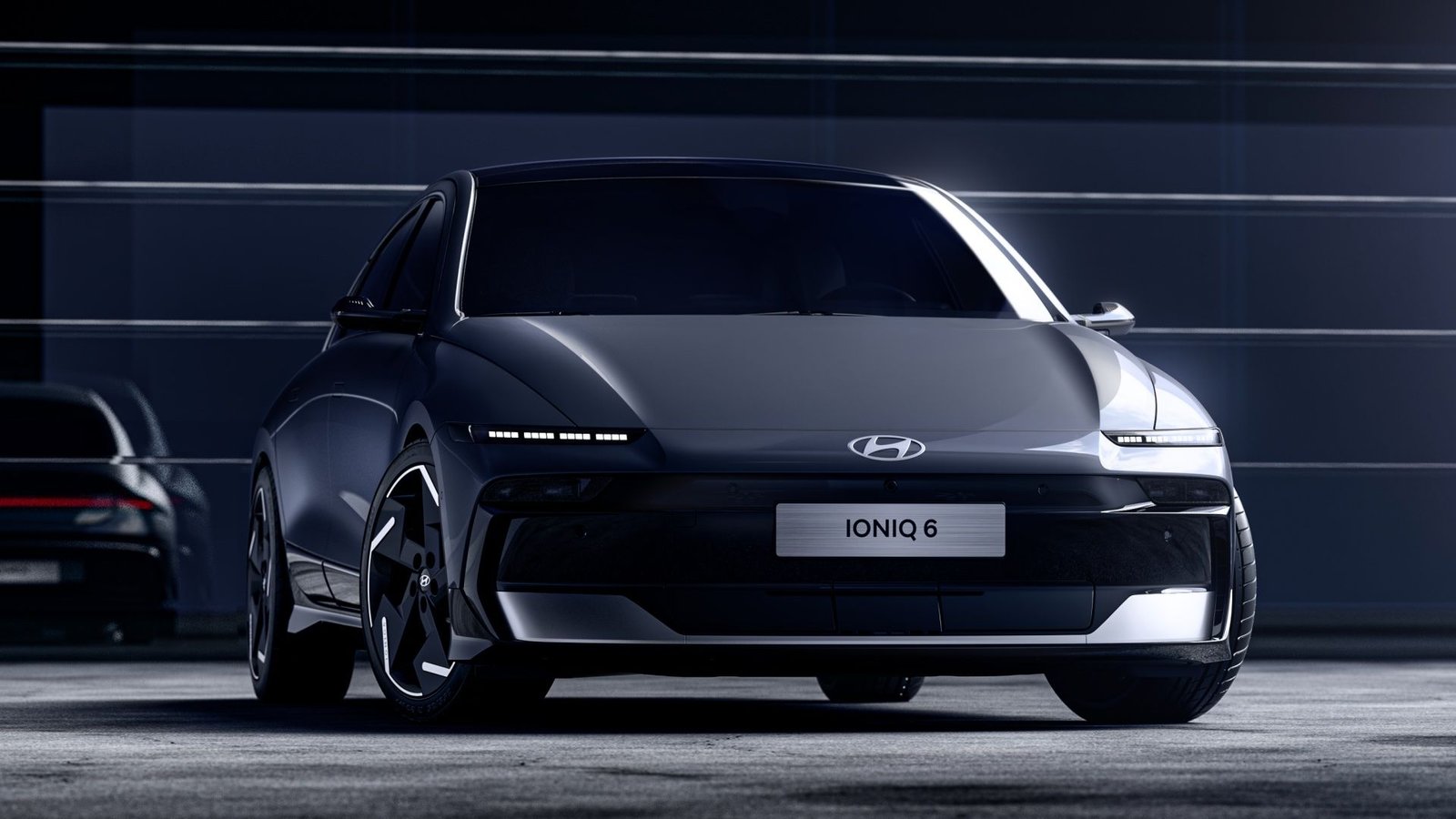
Since the electric car movement gained momentum a little over five years ago, battery technology has remained the focal point for many developers and manufacturers. Despite modern EV options being able to exceed well over 300 miles on a single charge, one aspect of this new automotive technology that consumers still struggle with is range anxiety. This apprehension stems from the fear of running out of battery power before reaching a destination or a charging station. No one wants to be stranded in the middle of nowhere with no means to power their car. Range anxiety remains a popular talking point among EV owners. Beneath the surface of this anxiety lies a complex interplay of psychological, technological, and infrastructural factors.

- Founded
-
1967
- Founder
-
Chung Ju-yung
- Headquarters
-
Seoul, South Korea
- Current CEO
-
JaeHoon Chang
- Divisions
-
Genesis, Ioniq, Kia
- Status
-
Active
Solid-state battery technology remains the most popular option for numerous brands and energy storage manufacturers for multiple reasons. Granted, it is a much more expensive technology to develop and produce, but its substantially better performance and longevity compared to lithium makes it a more compelling endeavor, especially when the goal is to lower the global carbon footprint. Hyundai is one brand that is consistently leading the charge in the solid-state battery development department, and its new revelation seems to have finally overcome the issue regarding copper corrosion, marking a landmark milestone for the technology.
To give you the most up-to-date and accurate information possible, the data used to compile this article was sourced from Hyundai and other authoritative sources, including CarBuzz and Cox Automotive.
Hyundai’s Copper Corrosion-Beating Discovery
This Marks A Huge Cost-Cutting Revelation

Hyundai’s advanced solid-state battery design stands out with a key breakthrough discovery that overcomes copper corrosion in sulphide electrolytes and slashes cost and complexity. Solid-state batteries previously avoided copper because sulphide electrolytes corrode it, forcing manufacturers to use nickel or stainless steel, which reduces conductivity and raises cost. As uncovered by CarBuzz, Hyundai recently filed a US patent that solves this problem with a clever layered structure. It uses a copper anode current collector wrapped in a protective buffer layer that fends off corrosive sulfides.
While unclear at this time, this buffer might involve a carbon sheet with vertically aligned carbon nanotubes plus lithiophilic metal particles such as silver, gold, or aluminum. The design offers strong adhesion, resilience to lithium deposition, and long-term cycling stability. This new structure lets engineers bring copper back into solid-state cells and regain its high conductivity and low cost, while resisting corrosion and boosting internal performance under demanding EV conditions. Solid-state batteries offer significant benefits over conventional lithium-ion tech. For starters, they feature a solid electrolyte instead of a liquid one, which enables higher energy density, faster charging, and better safety, mainly because the solid electrolyte isn’t flammable.

Hyundai is already committed to multiple solid-state approaches. It aims to start pilot production at its Uiwang Research Institute. It partners with firms like SES AI and Factorial Energy, and it collaborates with Seoul National University. Strategic emphasis on copper adds value to those efforts, since copper fits well into existing battery manufacturing and supply chains. The patent application reveals that Hyundai focused on material challenges and cost barriers rather than theoretical energy gains.
The new method layers a copper current collector, a protective coating, an anode, a sulfide electrolyte, a cathode, and a terminal collector in a configuration that protects copper from degradation. That layered design improves adhesion between components and suppresses lithium dendrite growth at the anode edges. By enabling copper use, Hyundai lowers material costs and improves conductivity compared to nickel or stainless steel current collectors. This provides a strong opportunity to boost performance, lower manufacturing costs, and aid the commercialization of solid-state cells.
The Competition Is Also Heavily Invested
Hyundai’s breakthrough arrives as pressure mounts across the auto industry to bring solid-state batteries to market. Other automakers, including Mercedes, Toyota, Honda, and Chinese battery giants like BYD and CATL, pursue their own versions. Industry expects mass production won’t happen before 2030. Hyundai doesn’t expect commercial solid-state batteries until 2030 at the earliest. That aligns with broader forecasts. Toyota and its partner Idemitsu target commercial production around 2027 or 2028, and plan mass rollout by 2030.
BYD expects to launch its first all-solid-state EV in 2027 and aims for mass production around 2030. Mercedes has already road-tested a prototype equipped with a solid-state battery via Factorial Energy and expects a range of over 621 miles. Many smartphone and industrial solid-state applications already exist, but producing robust, cost-effective solid-state batteries for EVs remains challenging. Hyundai moves solid-state tech forward with multiple tracks and commercial targets. Its copper-friendly patent adds a practical and scalable enhancement that layers innovation and tackles corrosion, cost, durability, and conductivity in one stroke. At the same time, Hyundai plays the long game for mass deployment after rigorous tests validated the design.
Why In-House Development Makes Sense
Outsourcing Isn’t Always The Best Option

Hyundai’s decision to build its solid-state battery packs in-house provides advantages in cost, supply chain control, and production quality. The South Korean brand will reduce its reliance on third-party suppliers like LG and CATL by developing its own battery technology. This method results in cutting procurement costs and minimizing price fluctuations typically caused by external market conditions. In-house production allows direct investment in research and development, optimizing battery chemistry and manufacturing processes to achieve higher energy density, improved safety, and longer lifespan while reducing overall production expenses.
Supply chain efficiency also benefits from substantial improvements as Hyundai secures direct access to raw materials, reducing risks of shortages or delays caused by external suppliers. Vertical integration also helps the company mitigate geopolitical risks and regulatory hurdles that could affect the import and export of critical battery components. Manufacturing solid-state batteries internally gives Hyundai complete control over quality standards, ensuring consistency and reliability across its electric vehicle lineup.
Becoming The Leader In The Solid-State Race

Hyundai will enhance the solid-state battery’s cell performance , optimize thermal management, and streamline battery pack assembly to improve durability and efficiency by refining production techniques. Additionally, in-house production accelerates the transition to mass manufacturing, allowing Hyundai to quickly scale operations and adapt to evolving technological advancements. This strategic approach strengthens the brand’s competitive position against rivals relying on external battery suppliers, enabling the company to produce cost-effective, high-performance solid-state batteries tailored to its vehicle architectures.
With improved quality control, lower costs, and a streamlined supply chain, Hyundai plans to offer electric vehicles with longer range, faster charging, and greater durability without compromising pricing competitiveness. The aim is to future-proof its EV strategy and ensure sustained profitability and leadership in the next generation of battery technology.
How These Strategies Impact Future EV Market Performance

The company will closely monitor the facility’s ability to produce these advanced batteries with consistency and efficiency. Once operational, Hyundai will use batteries produced at the facility for extensive testing before proceeding to mass production. Reports suggest that a Hyundai prototype vehicle equipped with solid-state batteries will debut before the end of the year, showcasing the technology in a real-world application. However, large-scale manufacturing will take time, with Hyundai’s current timeline targeting mass production by 2030.
It’s no secret that demand for EVs in the U.S. has declined over the last 12 months. This is for several reasons, with the cost factor being a major concern. Now that there are talks of the new administration winding down the Inflation Reduction Act tax credit, it could make things worse for new EVs in 2026. Solid-state battery technology will be a make-or-break situation for many leading brands, which is why there are so many eyes on Hyundai’s solid-state battery technology developments.